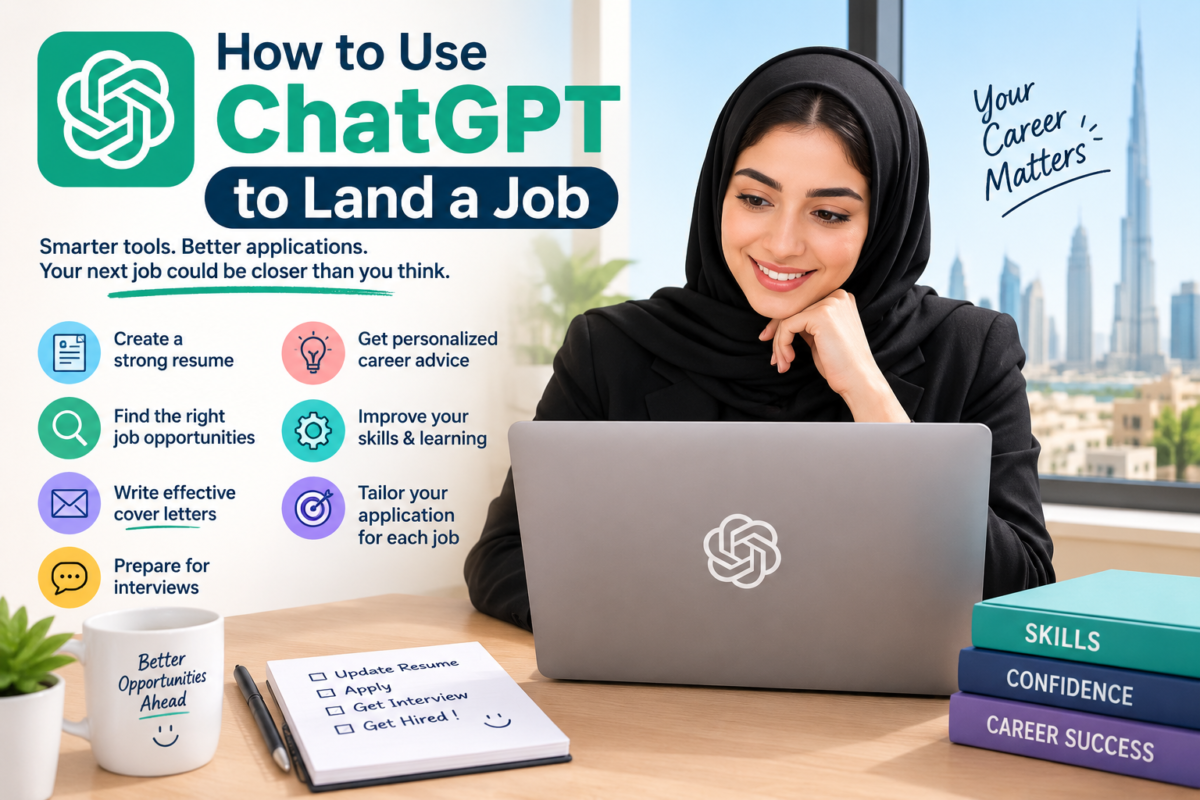
Discover how to use ChatGPT to land a job in 2026 with our complete step-by-step guide. In today’s competitive market, leveraging AI tools like ChatGPT can completely transform your job search, optimize your resume, and prepare you for tough interviews.
The job market in 2026 looks nothing like it did just a few years ago. Large and mid-sized companies now rely on AI systems to screen thousands of resumes in a matter of minutes, and the smartest candidates are using that same technology to their advantage. This guide walks you through exactly how to use ChatGPT at every stage of your job search from writing your resume to negotiating your salary once you’ve landed the offer.
Why AI Has Become Essential to Job Hunting
According to multiple HR industry reports, over 90% of large companies now use Applicant Tracking Systems (ATS) to filter resumes before a human ever lays eyes on them. That means your resume could get rejected automatically before anyone reads it, simply because it wasn’t formatted or written the right way.
This is exactly where ChatGPT comes in. It doesn’t just help you write — it helps you understand the “language” these systems are looking for and speak it fluently.
Discover how to use ChatGPT to land a job in 2026 with our complete step-by-step guide. In today’s competitive market, leveraging AI tools built on models from OpenAI can help you optimize your resume, improve your LinkedIn profile, and prepare for tough interviews.
1. Break Down the Job Posting and Pull Out Keywords
Before you write a single word, paste the entire job posting into ChatGPT and ask it to:
- Pull out the 10-15 most important keywords and skills
- Separate “must-have” requirements from “nice to have” preferences
- Summarize what the company is actually looking for in an ideal candidate
This one step alone saves you a huge amount of time and gives you a clear roadmap for everything that follows.
2. Build a Resume That Actually Gets Past the Filters
Once you know the keywords, ask ChatGPT to help you:
- Rework your past experience so those keywords appear naturally, not forced in
- Turn vague job duties into measurable achievements (say “increased sales by 20%” instead of “responsible for sales”)
- Keep the formatting clean and simple no complex tables or graphics that can confuse ATS systems
Important tip: Don’t rely entirely on what the AI writes for you. Treat it as a first draft, then rewrite it in your own voice so the resume feels authentic and genuinely reflects who you are professionally. Hiring managers today can usually spot a resume that was fully AI generated.
3. Write a Cover Letter Tailored to Each Job
One of the biggest mistakes candidates make is sending the exact same cover letter to every company. Instead:
- Paste in the job posting along with a summary of your background
- Ask ChatGPT to draft a short cover letter (no more than half a page) that directly connects the company’s needs to your skills
- Ask for a revised version with a more formal or more enthusiastic tone, depending on the company culture
A tailored cover letter tells the employer you’re genuinely interested in this specific role not just firing off applications at random.
4. Prepare Smarter for Your Interview
ChatGPT can essentially become your personal interview coach, available whenever you need it. Try asking it to:
- Roleplay as the interviewer based on the job title and company name
- Ask common behavioral questions like “Tell me about a time you faced a challenge at work and how you handled it”
- Review your answers and give feedback on wording and confidence
- Prepare technical questions if the role requires specialized skills
- Suggest smart questions to ask at the end of the interview this leaves a strong final impression
5. Find Companies and Opportunities That Actually Fit You
Career success isn’t just about landing any job it’s about landing one that fits your goals and lifestyle. Try describing to ChatGPT:
- Your professional values (work-life balance, fast growth, etc.)
- Your preferred work environment (remote, hybrid, or in office)
- Your field and experience level
It can help you sharpen your search criteria and prepare smart questions to ask during the interview so you can gauge a company’s real culture before accepting any offer.
6. Close Skill Gaps Quickly
If your dream job requires a skill you don’t have yet, ask ChatGPT for:
- A simple 4-8 week learning plan
- Free or low-cost learning resources
- Small project ideas to build a portfolio that proves your new skills in practice
7. Negotiate Your Salary with Confidence
Plenty of job seekers leave real money on the table simply because they’re too nervous to negotiate or don’t know how to bring it up professionally. ChatGPT can help you:
- Get a general sense of salary ranges in your field and location (always double-check against current, reliable sources)
- Practice a realistic negotiation conversation before the actual call
- Draft professional emails to discuss an offer or ask for time to think it over
Common Mistakes to Avoid
- Relying entirely on AI-generated text: Use ChatGPT to help you think, not to replace your own voice.
- Sending the same content to every employer: Customization is what sets you apart from other applicants.
- Skipping the final review: Always double check anything the AI writes for accuracy and to make sure it doesn’t overstate your experience.
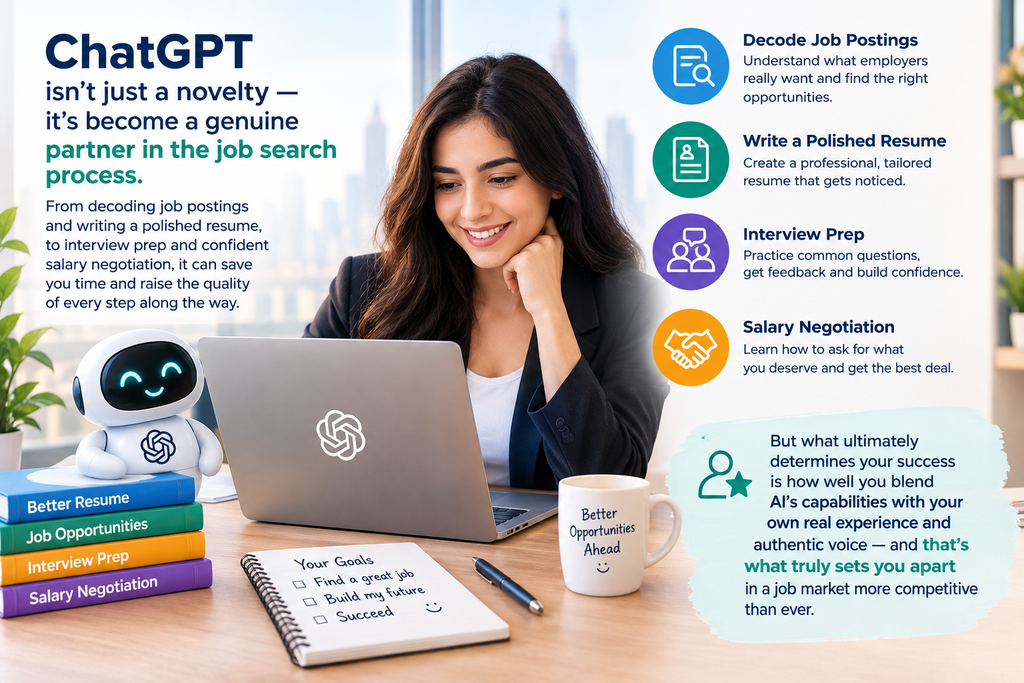
In 2026, ChatGPT isn’t just a novelty it’s become a genuine partner in the job search process. From decoding job postings and writing a polished resume, to interview prep and confident salary negotiation, it can save you time and raise the quality of every step along the way. But what ultimately determines your success is how well you blend AI’s capabilities with your own real experience and authentic voice and that’s what truly sets you apart in a job market more competitive than ever.
To Other Career Guides / Blog Postshttps://jobsdaily.ae/jobs-near-me/
Table of Contents

“The Jobs Daily editorial team is dedicated to tracking and publishing the latest verified job opportunities across the United Arab Emirates. We assist job seekers by providing career guides and resume optimization strategies designed to pass Applicant Tracking Systems (ATS).”