Introduction: Why This Role Keeps Growing in Demand
As cities around the world keep expanding, real estate development has become one of the most dynamic and fastest-growing pillars of the global economy. Property remains one of the backbones of national economies almost everywhere, which is exactly why so many professionals who build long careers in real estate development and property sales end up among the wealthiest in their fields.
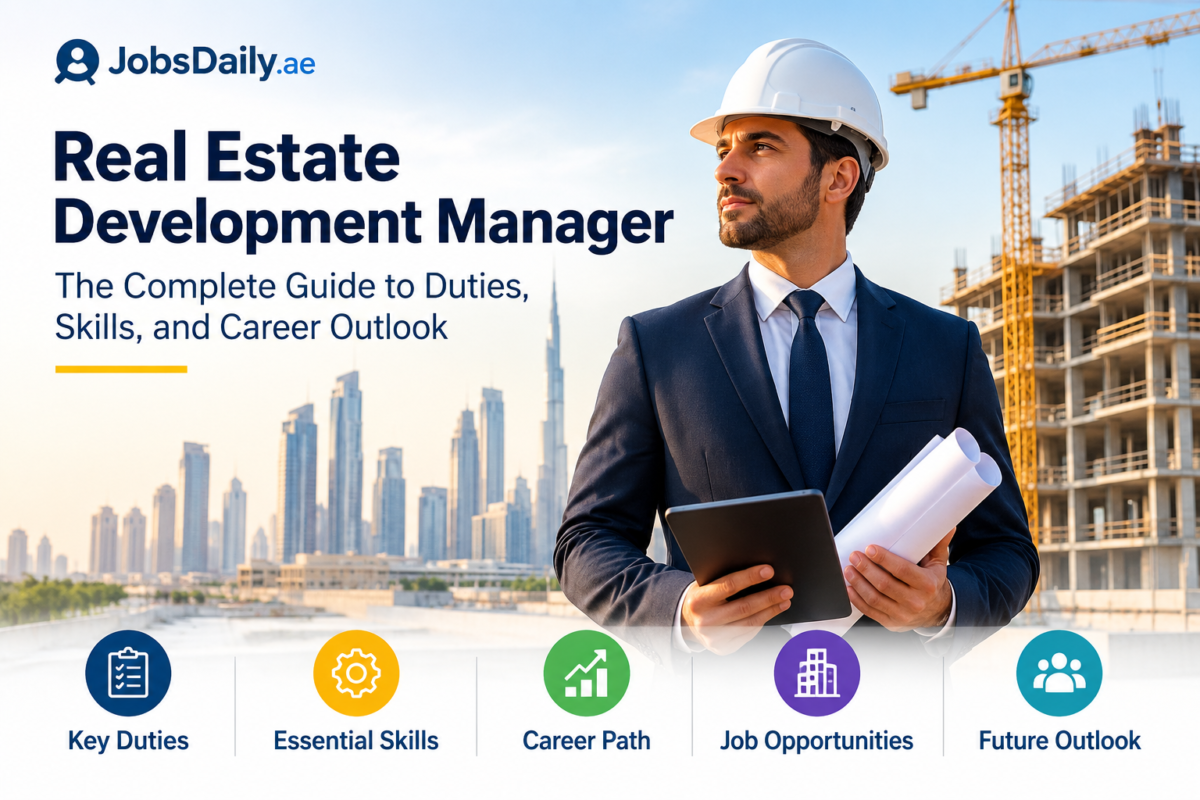
At the center of this industry sits one particularly demanding role: the real estate development manager. This person is responsible for turning an idea on paper into a finished, livable, sellable project starting from the very first feasibility study and design concept, all the way through construction, and finally handover to investors or buyers. Because that responsibility spans so many moving parts, the job calls for a rare combination of technical know how, strategic leadership, and sharp financial judgment.
This guide breaks down what a real estate development manager actually does day to day, the skills and qualifications employers look for, and what the future holds for this career.
What Exactly Does a Real Estate Development Manager Do?
In simple terms, a real estate development manager leads property projects of every type residential apartments and villas, commercial buildings, or industrial facilities from the initial concept and design stage, through construction, and all the way to final delivery, sale, or leasing.
Think of this person as the mastermind behind the entire project. They’re the connective tissue linking investors, engineers, contractors, and government authorities, and ultimately, they carry the weight of whether the project succeeds or fails.
Skills and Qualifications You Need for This Career
Managing projects that can run into the billions doesn’t leave room for guesswork. It takes a genuinely well rounded skill set. Here’s what tends to separate successful development managers from everyone else.
1. Leadership and People Skills
- The ability to lead cross-functional teams and actually get them aligned toward a shared outcome.
- Making fast, decisive calls under real pressure crises on construction sites rarely wait for a convenient moment.
- Building and maintaining a strong network of relationships with investors, government bodies, and business partners.
- Strong negotiation skills, since closing deals and resolving disputes is a near-daily part of the job.
2. Technical and Digital Skills
- Comfort with data analysis and budgeting tools, particularly Excel.
- Familiarity with professional project management software such as Primavera and MS Project, which help track timelines and allocate resources efficiently.
- A solid, up-to-date understanding of local and international real estate regulations and market laws.
3. Education and Experience
- A bachelor’s degree in a relevant field civil engineering, urban planning, business administration, or construction management are the most common paths.
- An MBA or another advanced degree is a strong plus and often gives candidates a real edge over other applicants.
- Typically, six to ten years of hands-on experience in construction and large-scale real estate project management.

Core Responsibilities of a Real Estate Development Manager
Running a real estate project means juggling several complex, overlapping tasks at once. Here are the responsibilities that define the role.
1. Permits and Legal Compliance
The manager stays in constant contact with government agencies and municipalities to secure the permits required for construction, while making sure every stage of the project meets urban planning laws and regulations.
2. Project Planning and Execution
This involves building a realistic timeline with clear milestones, keeping the project on track for delivery, and coordinating closely with engineers, consultants, and contractors so the work actually matches the original plan not just approximates it.
3. Financial Analysis and Feasibility Studies
This covers estimating land, construction, and marketing costs, managing projected budgets, and evaluating expected return on investment along with a clear-eyed assessment of the risks before any project gets the green light.
4. Contract and Vendor Management
Drafting and negotiating contracts with contractors and suppliers, and resolving the inevitable disputes or hiccups that come up during execution, all fall under this part of the job.
5. Marketing and Sales Oversight
The manager works hand in hand with the marketing team to shape the right strategy for selling or leasing units at the strongest possible price the market will support.
Is There a Real Future in This Career?
Short answer: yes, and a strong one. Real estate and construction aren’t industries that slow down they’re markets defined by constant competition and rising prices, which makes them genuinely lucrative for people with the right expertise.
As one data point, reports on the UAE real estate market show that the combined sales of the country’s top ten property developers passed roughly AED 113.7 billion in just the first half of 2026 alone. That single figure gives a sense of just how much urban expansion and investment opportunity this sector is generating.
That’s exactly why local and international companies are constantly on the lookout for skilled managers who can lead sustainable, well-executed projects. Demand for this role isn’t slowing down anytime soon.
For further reading, industry guidelines, and professional advancement resources related to Real Estate Development Management, consult these authoritative external resources:
Industry Associations & Global Standards
NAIOP (Commercial Real Estate Development Association) – Offers industry reports, educational courses, certifications, and research specifically tailored to commercial real estate development managers.
Urban Land Institute (ULI) – A global network of cross-disciplinary real estate and land use experts providing case studies, sustainability frameworks, and market trends.
Project Management Institute (PMI) – Governs the PMP (Project Management Professional) framework, which is widely adopted for managing real estate development timelines, risks, and budgets.
Governance & Regulatory Frameworks (UAE Market)
Dubai Land Department (DLD) / RERA – Official portal for Real Estate Regulatory Agency (RERA) compliance, escrow account regulations, developer registration, and project approval requirements in Dubai.
Abu Dhabi Real Estate Centre (ADREC) – Regulatory authority overseeing real estate project registration, land entitlements, and developer licensing in Abu Dhabi.
Academic & Technical Learning
RICS (Royal Institution of Chartered Surveyors) – Global standard-setting body for qualifications and standards in land, property, and construction management.
Frequently Asked Questions
What’s the difference between a real estate development manager and a construction project manager? A construction project manager typically focuses on the technical and execution side of building. A real estate development manager, by contrast, oversees the entire lifecycle of a project from financial feasibility all the way through marketing and sales.
Do you need an engineering degree to become a real estate development manager? Not necessarily. Plenty of successful managers come from business or finance backgrounds, though an engineering or urban planning background does give a real advantage when it comes to understanding the technical side of a project.
What are the biggest challenges in this role? Market volatility, navigating complex government procedures, managing financial risk, and coordinating dozens of stakeholders at once often all at the same time are among the toughest parts of the job.
A real estate development manager needs a rare mix of creativity, persuasion, and people skills which is exactly why this role suits people who are genuinely passionate about building things and making smart investments happen. Since demand for property development shows no sign of slowing down globally, succeeding in this competitive field means committing to continuous learning, leaning on experienced mentors, and leading teams toward projects that add real, lasting value to communities and the market alike.
Browse active Real Estate & Property vacancies
Table of Contents

“The Jobs Daily editorial team is dedicated to tracking and publishing the latest verified job opportunities across the United Arab Emirates. We assist job seekers by providing career guides and resume optimization strategies designed to pass Applicant Tracking Systems (ATS).”