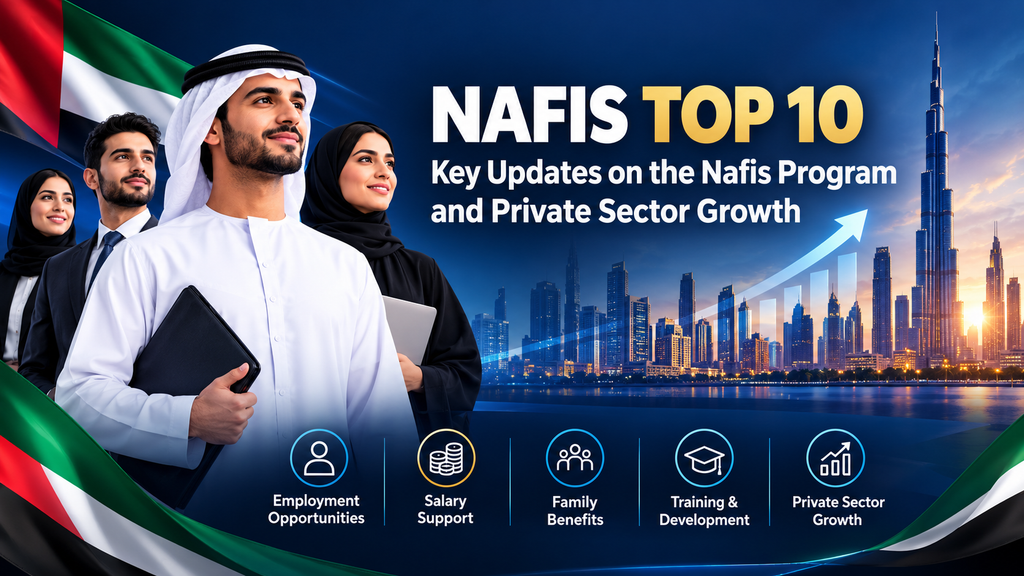
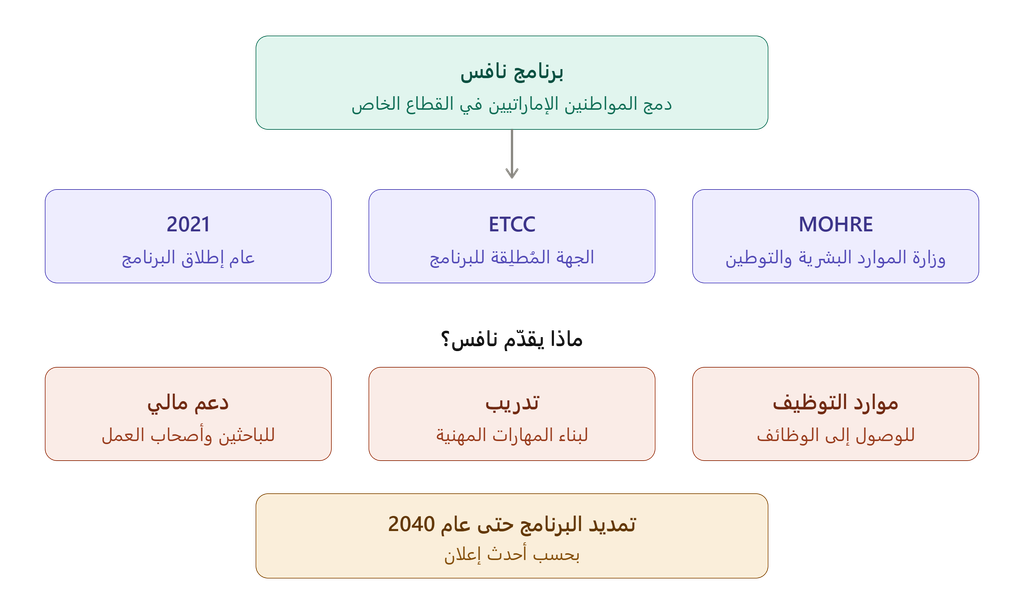
The Nafis Program is a federal initiative launched under the Emirati Talent Competitiveness Council (ETCC) to integrate UAE nationals into the private sector. Managed alongside the Ministry of Human Resources and Emiratisation (MOHRE) and integrated with the Official Portal of the UAE Government, Nafis provides financial subsidies, training, and recruitment resources for job seekers and employers
Since it launched in 2021, the Nafis program has grown from a government initiative into one of the main pathways Emirati citizens rely on to break into the private sector and build a stable career. With the recent announcement extending the program through 2040, it’s become essential for any job seeker or recent graduate to understand exactly how it works, what it actually offers, and how to use it well.
This guide walks through ten practical things worth knowing about Nafis, based on the latest updates from the Emirati Talent Competitiveness Council.
Visit the official portal at nafis.gov.ae or download the Nafis App
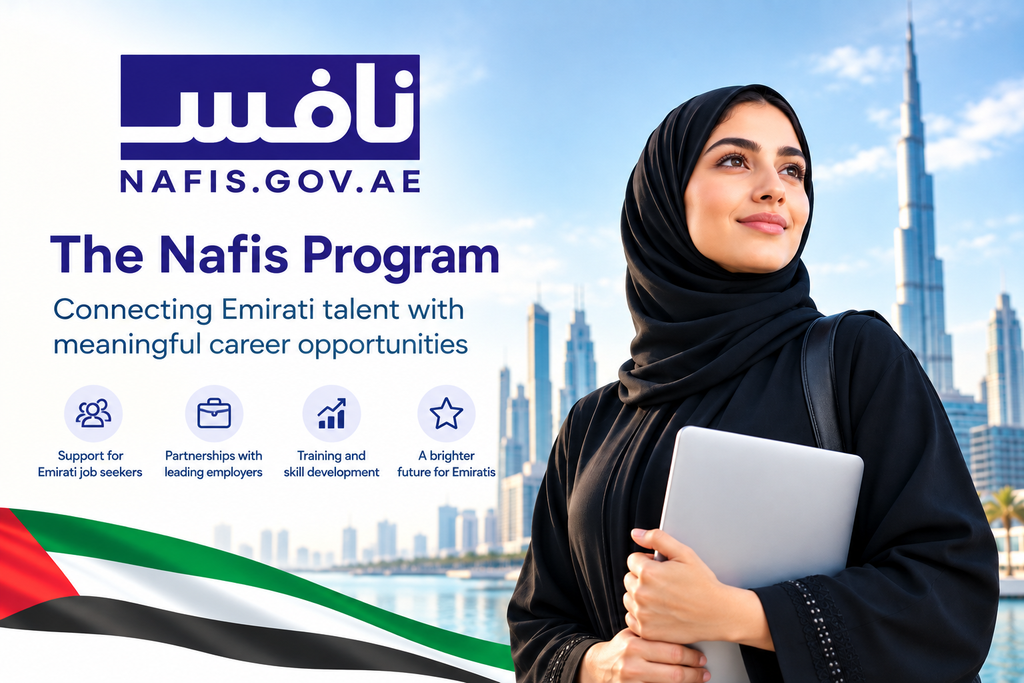
1. What Exactly Is the Nafis Program?
Nafis is a national initiative overseen by the Emirati Talent Competitiveness Council. Its purpose is to help Emirati citizens move into private-sector jobs by combining real employment opportunities with training, professional development, and financial support along the way. The point isn’t just “finding a job” it’s building genuine competitiveness so that Emirati talent becomes a first choice for private companies, not a fallback.
2. Who Is the Program For?Nafis
Nafis is aimed at Emirati citizens who want to work in the private sector whether that’s a fresh graduate landing their first job, or someone already employed who wants to grow their career in a more competitive environment.
3. What Nafis Is Trying to Achieve
The program’s core goals include:
- Increasing the share of citizens working in the private sector
- Developing professional skills that match what today’s job market actually needs
- Encouraging private companies to hire local talent
- Supporting the financial and social stability of Emirati families
- Advancing the UAE’s broader Emiratisation goals
The numbers back this up. The share of new graduates entering the private sector has climbed sharply over the past few years, to the point where most graduates now start their careers there rather than defaulting to government jobs.
4. The Program’s Main Pillars
Nafis is built around a few core tracks:
Salary support extra financial support paid on top of your base salary, under specific eligibility conditions, designed to make private sector jobs more attractive to compete with.
Work experience programs aimed at solving the classic catch-22 new graduates face: you need experience to get hired, but you can’t get experience without being hired.
Professional development training designed to keep pace with a job market that’s constantly shifting, including digital and tech skills.
5. Is the Financial Support the Same as Your Salary?
No and this distinction matters:
- Your base salary is set entirely by your employment contract with the company you work for. That’s the employer’s responsibility, full stop.
- The Nafis financial support is an additional amount paid on top, based on eligibility rules the program sets, meant to sweeten the deal of working in the private sector.
The program has also expanded to include family-focused support like adjustments to the child allowance and support for the wives of Emirati men working in the private sector reflecting a broader view that family stability and economic productivity go hand in hand.
6. Is Registering for Nafis Free?
Yes, completely. Registration through the official Nafis platform costs nothing. One important warning worth repeating: no third party is authorized to charge you a fee for registration or to “guarantee” you a job. If anyone asks for money in exchange for either, that’s a red flag worth checking carefully before you proceed.
7. How to Register and Search for Jobs on Nafis
- Create an account on the official Nafis platform and complete your personal details in full.
- Build a professional, concise CV that highlights the qualifications and skills relevant to the specific role you’re targeting not everything you’ve ever done.
- Add your academic qualifications, work experience, and skills accurately.
- Search and apply for openings that actually match your background and field.
- Check your application status regularly competition for the better opportunities tends to be fierce.
8. Does Registering Guarantee You a Job?
No. Registering with Nafis is a necessary first step, not an automatic ticket to employment. Final acceptance still depends on the specific role’s requirements and the hiring company’s decision, as well as how well your profile fits what they’re looking for. That’s exactly why staying persistent applying consistently and following up makes a real difference in your odds.
9. Practical Tips to Improve Your Chances
- Keep your CV updated and tailor it to each job you apply for, rather than sending out one generic version everywhere.
- Keep developing your skills, especially in digital and technical areas, since the job market shifts constantly.
- Prepare seriously for interviews practice common questions and work on your communication skills.
- Don’t rule out roles adjacent to your field, even if they’re not your first choice. Real world experience often opens doors to better opportunities down the line.
10. What Sets Nafis Apart From Regular Job Boards?
Unlike typical job-search websites, Nafis operates as a full government-backed ecosystem that combines job placement, financial incentives, and training under one long term national strategy. With the program now extended through 2040, it’s clear the government treats this as a permanent strategic track for empowering national talent not a short-term initiative.
Frequently Asked Questions About Nafis
Is Nafis only for Emirati citizens? Yes. The program is exclusively for Emirati citizens who meet its eligibility criteria.
Where can I find the latest official updates on Nafis? Always check the official platform run by the Emirati Talent Competitiveness Council it’s the most reliable source for any changes to eligibility or program offerings.
Can I apply to more than one job at the same time? Yes, and it’s actually recommended, as long as each role genuinely fits your qualifications and skills.
Nafis has become one of the most valuable tools Emirati talent has for breaking into the private sector, thanks to its mix of financial support, training, and real job opportunities. But getting the most out of it takes ongoing effort on your end: an up-to-date CV, sharpened skills, and steady follow through on applications. Success in the job market rarely comes from registering alone it comes from what you do consistently after that.
Investing in professional development and leveraging government initiatives is a pivotal step toward building a successful career path. In this context, the Nafis program offers an exceptional suite of financial and training support packages designed to empower national talent. You can explore full details and eligibility criteria through our comprehensive guide to the Nafis program and UAE Emiratisation updates to learn how to register and capitalize on available opportunities in the private sector.
Nafis Programme and Private Sector Growth: Q&A
1. What is the Nafis Programme?
Nafis was launched in September 2021 as part of the UAE’s “Projects of the 50.” It aims to increase Emirati employment in the private sector through financial support, training, mentoring, and career services.
2. Why was it created?
It was built on financial incentives and Emiratisation quotas meant to narrow the pay gap between public and private sector jobs. The goal was to make private-sector careers attractive to Emiratis, who had historically preferred government jobs.
3. What are the Emiratisation requirements for companies?
Private companies with 50 or more employees must raise their Emirati workforce by 2% each year, targeting 10% by 2026. Mid-year and year-end deadlines apply. For example, the latest deadline fell on June 30.
4. What happens to companies that don’t comply?
Breaches can lead to fines of Dh20,000 to Dh100,000 per case. The ministry also takes a hard line on “fake Emiratisation,” where companies hire UAE citizens only on paper to meet quotas and claim Nafis benefits.
5. How has Nafis performed so far?
- The original goal was 75,000 Emiratis in the private sector by 2025. khaleejtimes
- More than 176,000 Emiratis now work in the private sector, about 157,000 of whom joined after the programme launched. Other reports give 152,000, so the exact figure depends on the source and the date counted.
- 58% of graduates now prefer private-sector careers, up from 15% before the programme.
- Women make up 74% of beneficiaries.
6. How does Nafis support private sector growth?
- Talent pipeline: Companies get access to trained Emirati candidates through the platform, which links job seekers with private employers.
- Skills development: Participants receive coaching, professional training, and mentoring.
- Cost support: Salary and allowance support reduces the cost of hiring and retaining Emiratis.
- Recognition: There are awards for companies that excel in hiring and developing Emirati talent.
- Workforce stability: More Emiratis in the private sector deepens local expertise and reduces reliance on public-sector hiring.
7. Was the programme extended?
Yes. On 6 April 2026 the UAE extended Nafis until 2040, turning it into a long-term national framework.
8. What new financial support was announced?
The cap of four children on the monthly Dh600 allowance was removed, and the salary support ceiling was set at Dh20,000 per month, with updated mechanisms taking effect from September 2026.
9. What is “Nafis 2026”?
It is a strategic shift from counting how many Emiratis are employed to prioritising the quality and impact of Emiratisation. It introduces five AI-enabled priorities, with more focus on Emirati representation in future-oriented roles.
10. What challenges remain?
- Preventing “paper” hiring and keeping Emiratis in meaningful roles.
- Moving Emiratis beyond entry-level and administrative jobs into specialised and leadership positions.
- Helping smaller companies bear the cost of compliance.
- Retaining Emirati employees over the long term, not just hiring them
Table of Contents

“The Jobs Daily editorial team is dedicated to tracking and publishing the latest verified job opportunities across the United Arab Emirates. We assist job seekers by providing career guides and resume optimization strategies designed to pass Applicant Tracking Systems (ATS).”